Choose from a menu of up to 4 rentals undefined
Pagan Celtic fort Plavecké Podhradie
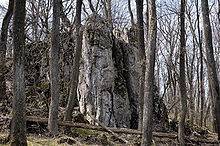
Pohanská is a hill that rises above the village of Plavecké Podhradie and also a significant archaeological site located on this hill. This area has been inhabited since prehistoric times, by Stone and Bronze Age cultures. The peak of its settlement was in the first and second centuries BC, when the Celts established the largest fortification in Slovakia here. It was a Celtic town - an oppidum - which was larger than the entire medieval Bratislava. It served as an important power center. To this day, remnants of a double to triple rampart have been preserved at this site. In front of the rampart with wooden palisades stood a stone wall. At the top of the fortification was a fortified acropolis, protected by a gate with a tall wooden tower that was difficult to conquer. Within the complex, there were residential, economic, and other buildings. Traces of them can still be seen today in the form of terrain irregularities. An interesting feature is the funnel-shaped pits, which were pagan sacrificial sites. From the summit of Pohanská, there is a beautiful view of the surroundings. This hill and its vicinity have been declared a national nature reserve. Here you will find rare xerophytic and thermophilic plants and animals, karst phenomena, and caves. You can reach this hill via the Educational Trail of Plavecký kras, from which you will turn off onto an unmarked forest road leading to the top. The starting points are the villages of Plavecké Podhradie and Plavecký Mikuláš.Read on
| Contacts: | +421 34/654 50 16 e-mail Web page |